Why Is Backflow Testing Necessary?
Protecting Minnesota’s Drinking Water, One Test at a Time
Most homeowners don’t think about their backflow prevention device until they receive a notice from their city requiring annual testing. It’s a common question: “Why do I need to test my backflow device every year?”
The answer is simple. Backflow prevention devices help protect your home’s drinking water and your community’s public water supply.
What Is Backflow?
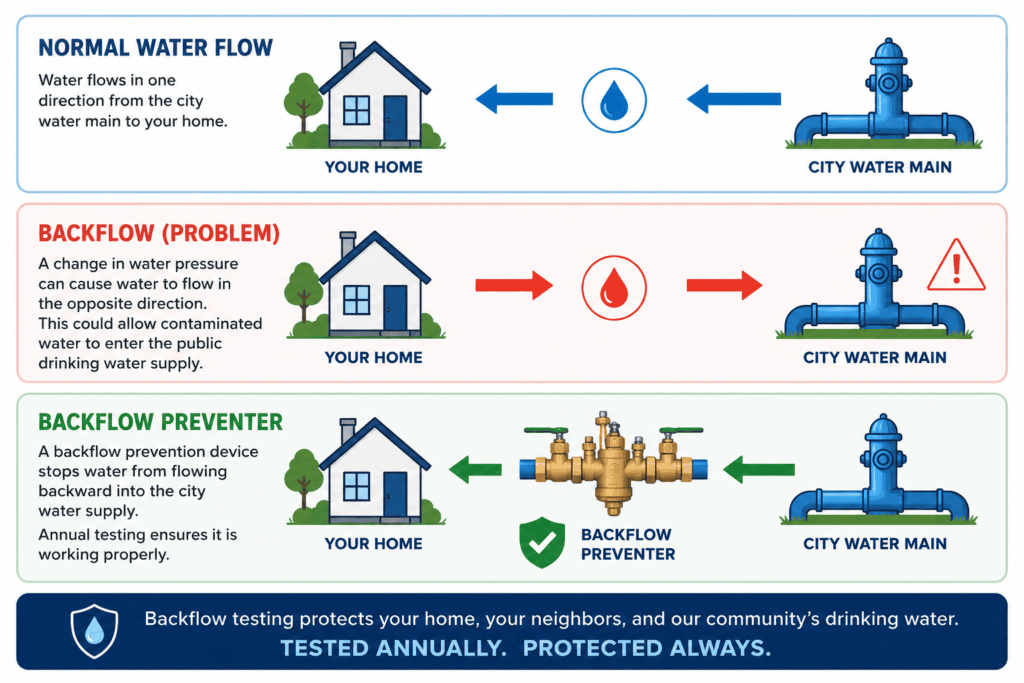
Normally, water flows in one direction: from the public water system into your home or business.
Occasionally, changes in water pressure can cause water to flow in the opposite direction, also known as backflow.
If backflow occurs, water from irrigation systems, boilers, fire sprinkler systems, or other plumbing connections could potentially flow back into the public drinking water system.
What Does a Backflow Prevention Device Do?
A backflow prevention device stops water from flowing backward into the public water supply.
These devices act like a one-way gate, allowing clean water to flow into your home while preventing contaminated water from flowing back into the city’s water system.
Because they are mechanical devices with moving parts, they should be tested periodically to ensure they are working properly.
Why Is Annual Testing Required?
Many Minnesota cities require annual testing of backflow prevention devices.
Regular testing helps verify that the device is operating correctly and continues to provide the protection it was designed for.
Even if your device has worked perfectly for years, annual testing helps identify wear or mechanical issues before they become larger problems.
Who Needs Backflow Testing?
Annual backflow testing is commonly required for:
- Homes with underground sprinkler systems
- Commercial buildings
- Apartment and townhome communities
- Restaurants
- Dental and medical offices
- Nail salons
- Irrigation systems
- Fire sprinkler systems
- Manufacturing facilities
If your city has sent you a notice, it’s likely because your property has a registered backflow prevention device that requires annual certification.
What Happens During the Test?
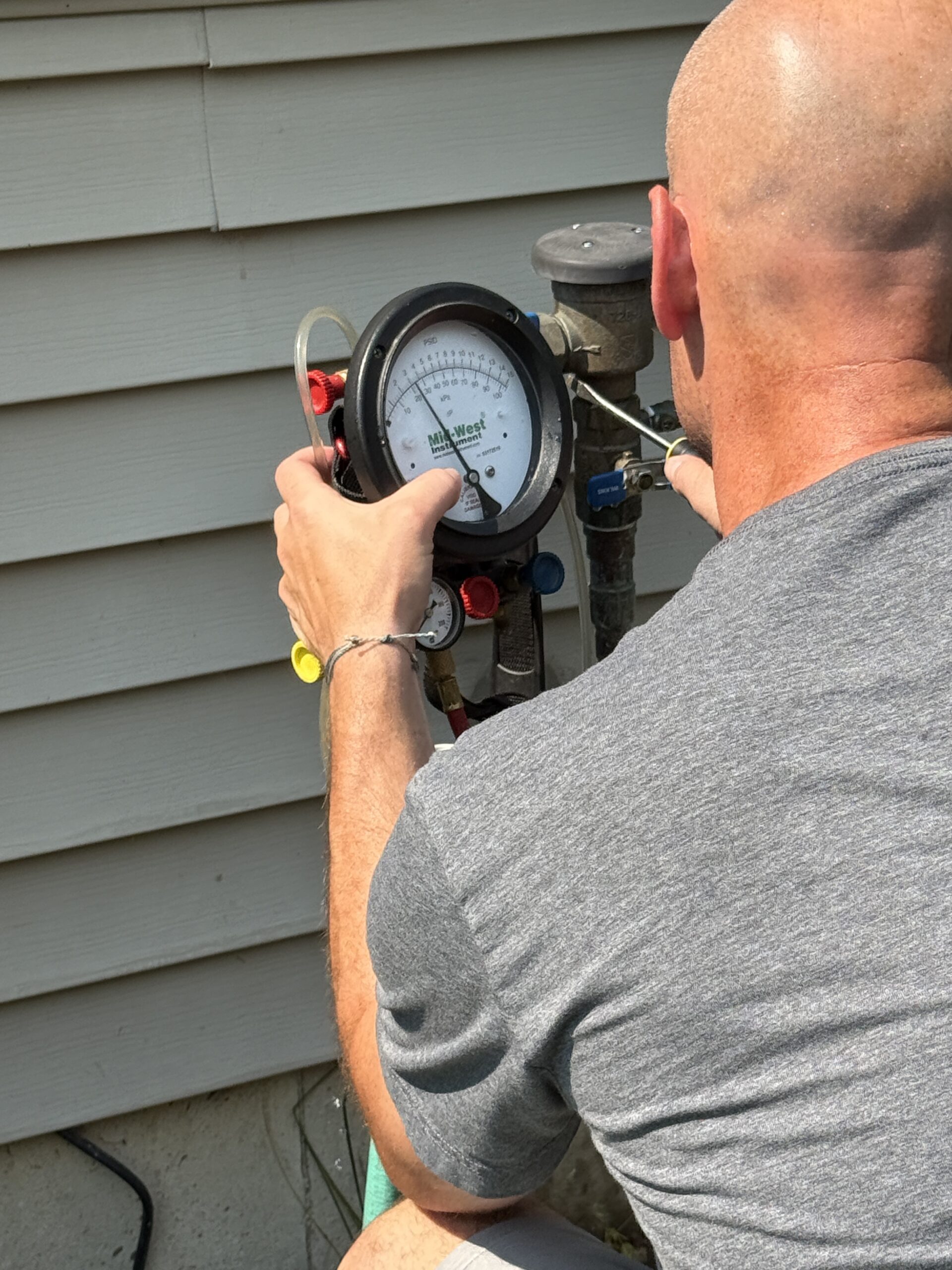
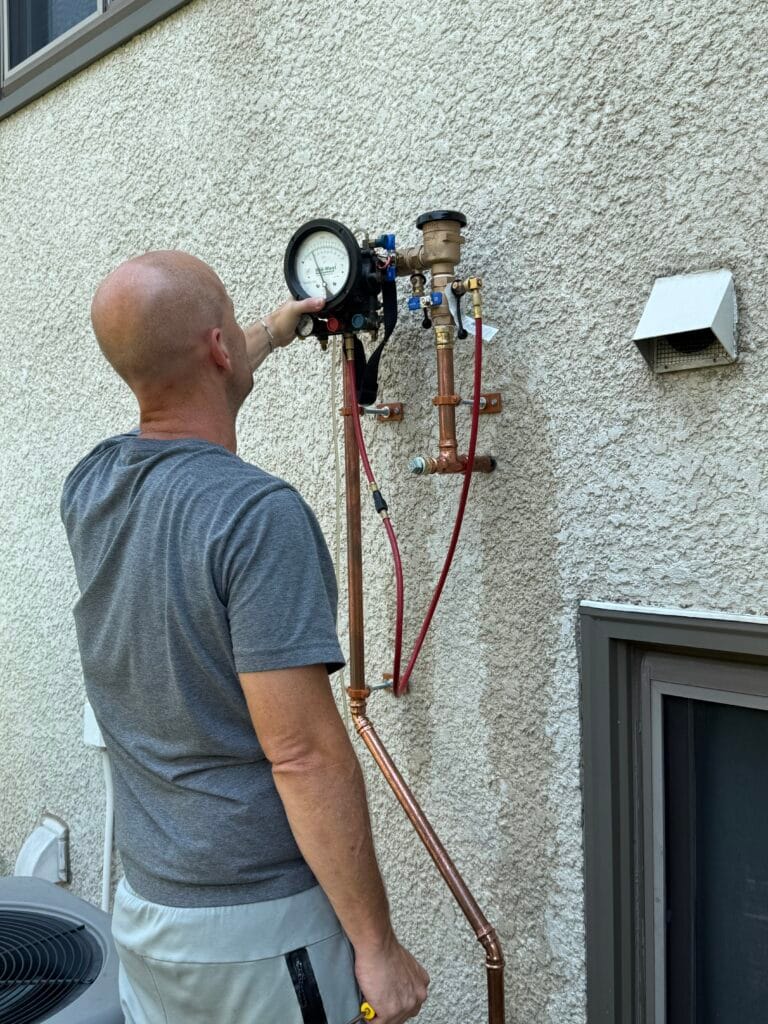
A certified backflow prevention tester connects specialized testing equipment to your device to verify that it is operating properly.
Most residential backflow tests take less than 20 minutes and require very little disruption to your day. Most of the time, you don’t even have to be home.
Once testing is complete, we’ll document the results and submit the required paperwork when accepted by your municipality.
What If My Device Doesn’t Pass?
Backflow prevention devices can wear over time, just like any other mechanical equipment.
If your device does not pass testing, we’ll explain the results and provide documentation showing what was found. You can then work with a qualified repair company to make any necessary repairs before the device is retested.
Annual Backflow Testing Made Simple
At Twin Cities Backflow Testing, annual backflow testing is our specialty.
Backflow Testing. That’s All We Do.
We provide certified residential and commercial backflow testing throughout the Twin Cities, making the process simple with convenient scheduling, professional service, and timely paperwork submission.
If you’ve received a backflow testing notice from your city, we’re here to help.
We’re Here to Help
Whether you’re testing a residential irrigation system or managing a commercial property, Twin Cities Backflow Testing provides certified testing, convenient scheduling, and friendly local service throughout the Twin Cities.
Frequently Asked Questions